
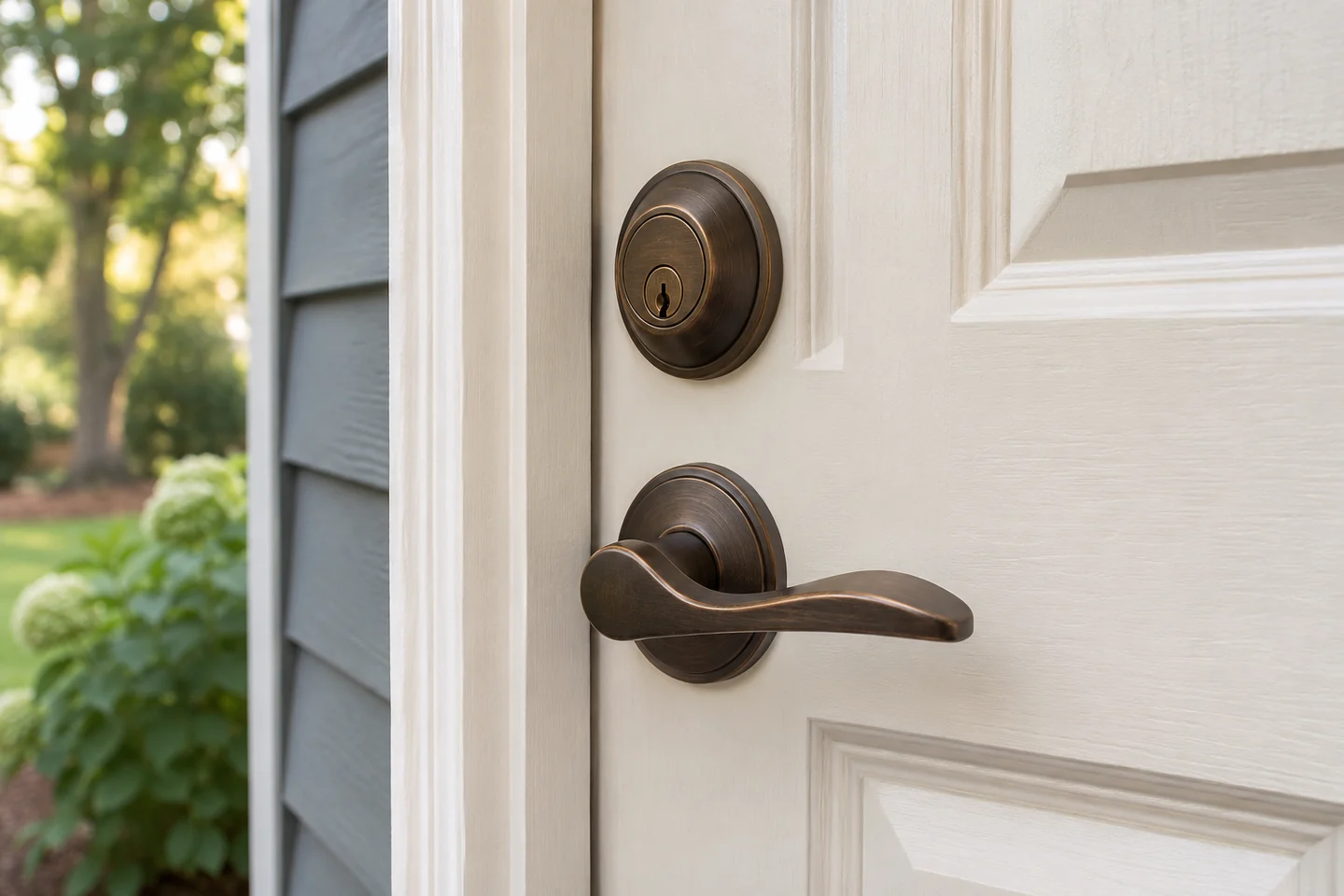
Keep the good parts.
A sound lock doesn't become unsuitable just because someone else may have a key. Rekeying an existing lock can change access while keeping compatible hardware. A damaged latch, loose fixing or worn cylinder needs its own assessment.
Think beyond the front entrance.
Include the door from the garage, a side entrance and any separate access used by guests. You don't need to make every lock identical. Start by deciding who needs to get through each door, and whether sharing a key would actually make life easier.
New features should solve an everyday problem.
A keypad may help when several people need access, but it also introduces codes, batteries and backup access to manage. A conventional lock may suit you just as well. Check how the hardware feels from inside and outside before choosing by appearance alone.
Tell us about the sticking point.
Does the bolt move freely with the door open, then catch when you close it? Is the handle loose on one side? These observations are a useful start for a closer look at the lock and doorway. They don't establish the cause without an inspection.
A couple of common questions.
Can different doors use one key?
Sometimes, if the cylinders use compatible systems and are suitable for the work. Similar-looking handles don't establish that.
Should I change locks when I move in?
Review the keys and the condition of each entrance first. The useful choice may be rekeying, a repair or replacement, depending on what you find.