
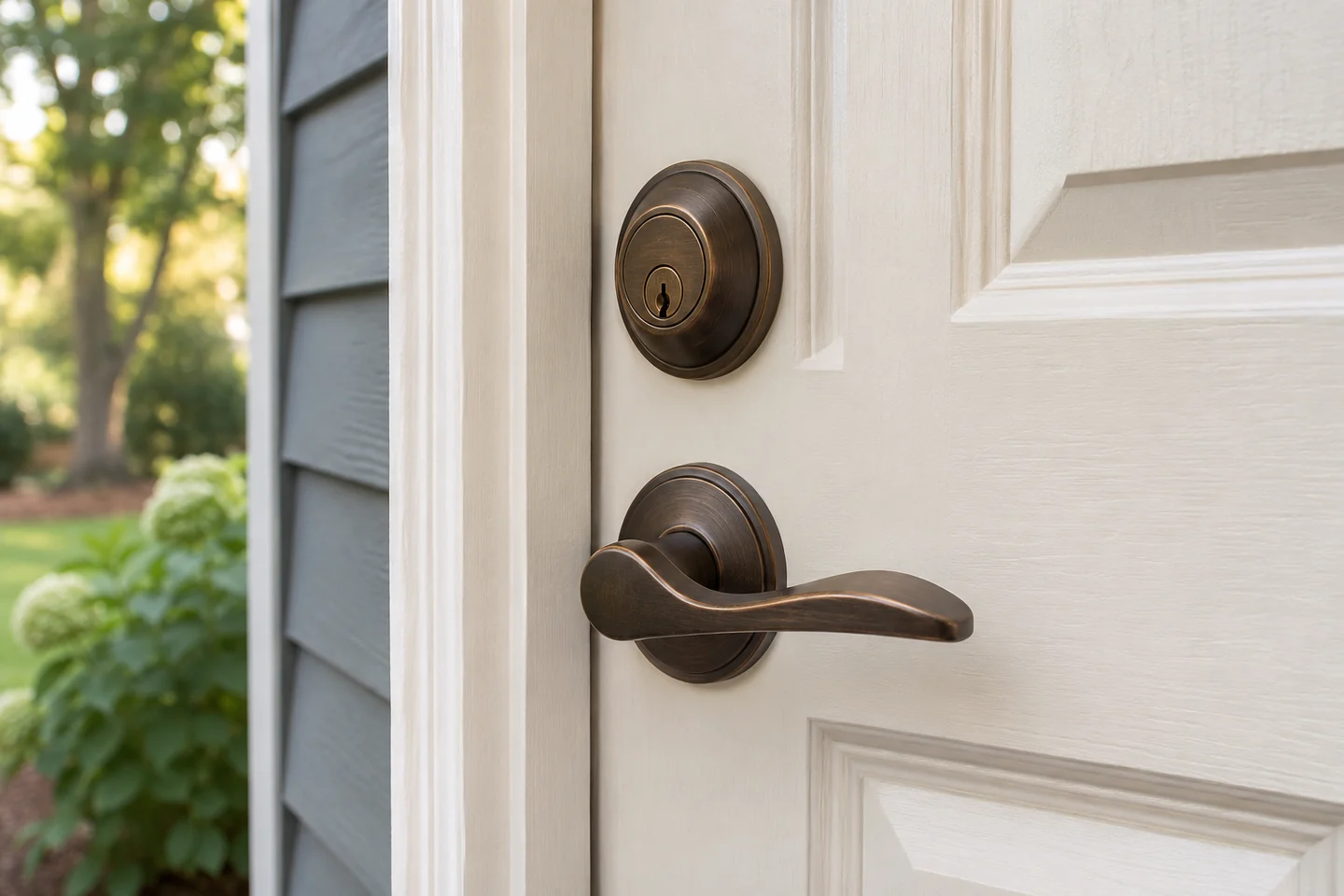
Decide which keys should stop working.
After a move or a missing spare, identify the doors that the old key opens. A front entrance, side door and garage-to-house door may not share a key. Make a short list before deciding how much work is needed.
Check condition before combination.
Rekeying changes the key a suitable cylinder accepts. It doesn't repair a loose handle or a bolt that catches in the frame. If the door already has a fault, discuss repairing that problem as part of the decision.
One household doesn't always mean one key.
Compatible locks may be arranged to use the same key. Mixed systems or specialist hardware can limit that. It's better to check the actual locks than assume matching finishes mean matching keyways.
Review the other ways in.
Garage remotes, keypads and electronic codes are separate from a mechanical house key. Our moving-in access checklist helps keep those items in the same conversation without treating them as one system.
A couple of common questions.
Does rekeying mean copying my current key?
No. A copy still opens the same lock. Rekeying changes which key the cylinder accepts, so the previous key should no longer operate that changed lock.
Can a damaged lock be rekeyed?
Its condition needs checking first. A new key combination doesn't correct damaged or worn hardware.