
Notice when it happens.
Does it stick only after the door closes? Does a spare behave differently? Has the problem appeared suddenly or become worse over time? Describe what you've noticed during normal use rather than forcing it through another test.
Look at the whole opening.
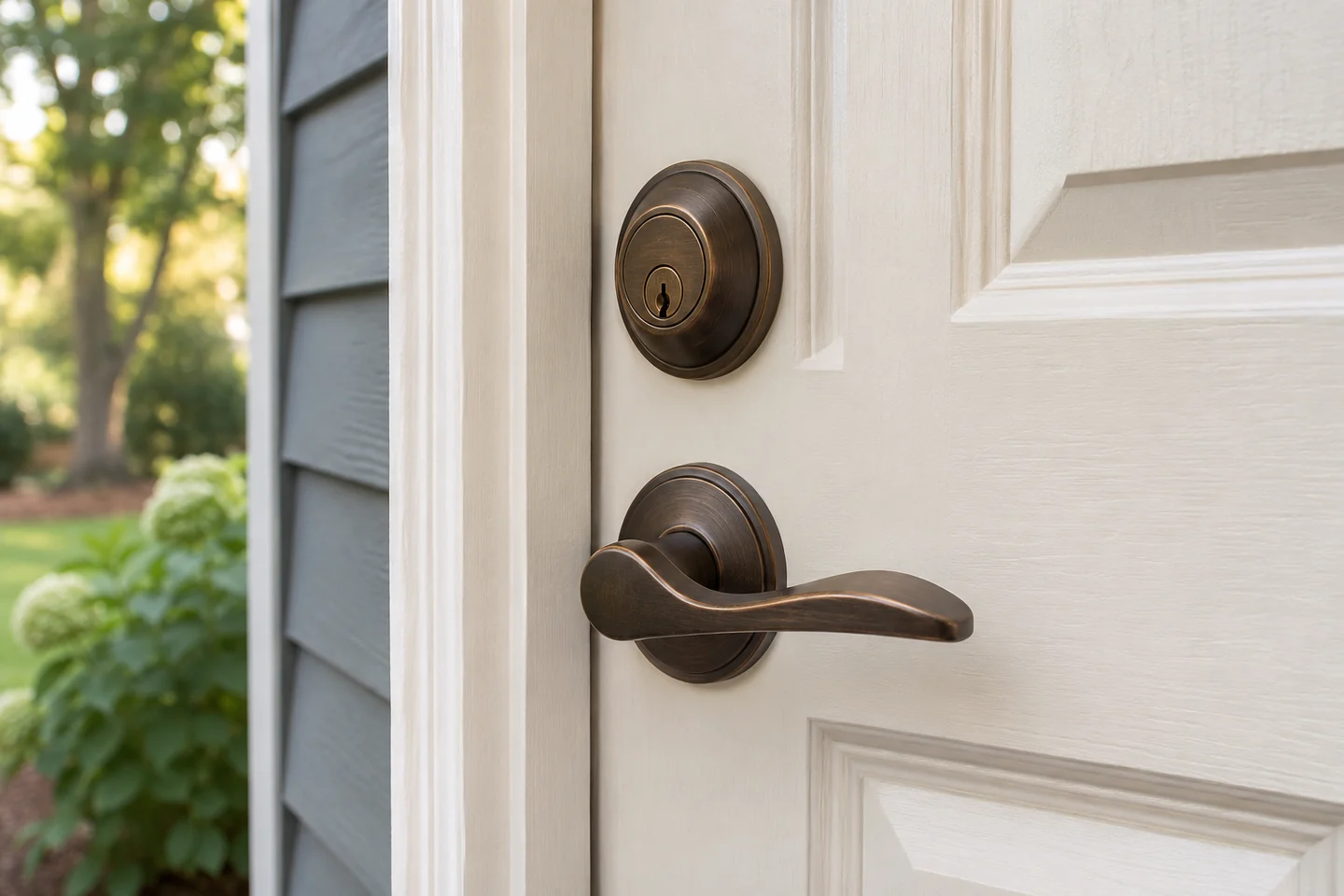
The handle, latch, cylinder and frame work together. A fault in one part can make another feel wrong. Replacing the key or cylinder alone may leave an alignment issue unchanged, so ask which component needs attention.
Keep useful hardware where it makes sense.
Some faults can be addressed without replacing the full lock. Others involve damage that makes replacement the better choice. The assessment should explain that choice and what the proposed work will fix.
Finish with normal use.
Once the work is done, check the handle and locking action from the appropriate sides. If you're also concerned about missing copies, bring up changing the working key. A repair and a change of access solve different problems.
A couple of common questions.
Should I keep turning a stuck key?
Avoid forcing it. Explain whether it is bent, broken or partly inserted, and keep any loose pieces available.
Does an old lock always need replacement?
Age alone doesn't decide that. Condition, the way the door is used and the access you need are more useful starting points.