
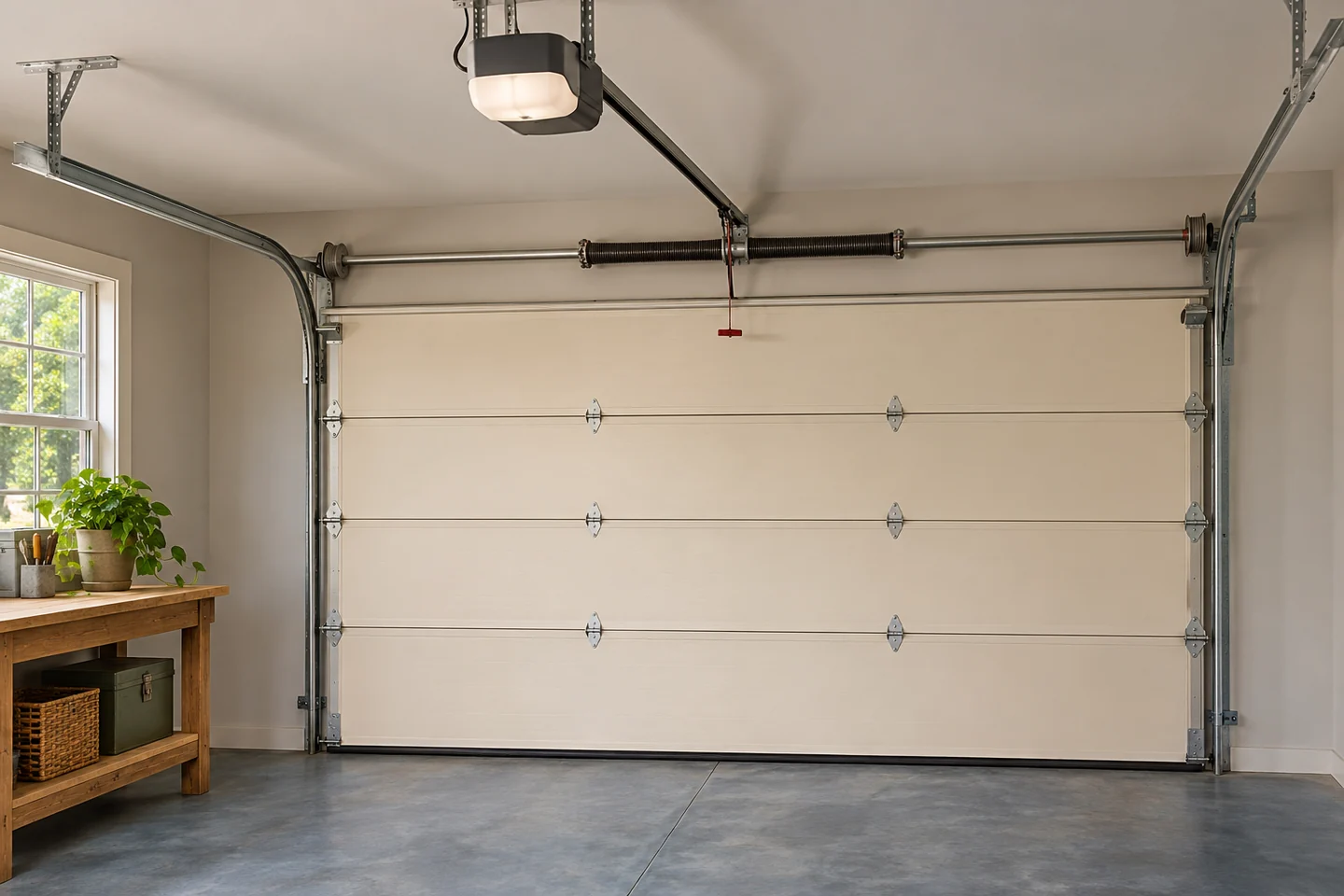
The door and opener have different jobs.
The panels, rollers and tracks guide a heavy moving door. Springs and cables help manage its weight. The opener drives the movement. A new remote won't correct a door that binds, and a struggling motor doesn't by itself prove the motor has failed.
Stop when the movement looks wrong.
Keep people clear of a crooked, stuck or unusually moving door and stop operating it. A damaged spring or cable needs specialist assessment. Don't try to adjust tension or release a door whose condition you don't know.
Describe the controls too.
Mention whether the wall button, remote and keypad behave differently. If you noticed a light or sound during normal use, include it. There is no need to keep cycling the opener to recreate a fault.
Make the decision with the reason in front of you.
Ask which part failed and what the quote includes. If a new door or opener is recommended, ask why repair is unsuitable. Our repair-or-replacement guide gives you a few useful comparison points without treating an online price as your quote.
Panels, tracks, rollers and the counterbalance system help the door move. A crooked or damaged door should stay out of use.
The motor drives the opening cycle. A running motor with no door movement needs a different assessment from a silent opener.
Safety sensors are separate from the remote. Describe any lights or reversing behavior, and do not bypass a safety device.
A couple of common questions.
Does one broken part mean a new door?
Not always. The failed part, damage elsewhere and the condition of the system all affect the options. Ask for the reason behind the recommendation.
Is the garage page available for other towns?
There are local garage pages for Huntersville and other selected markets. Call with the address and work needed to check availability.