
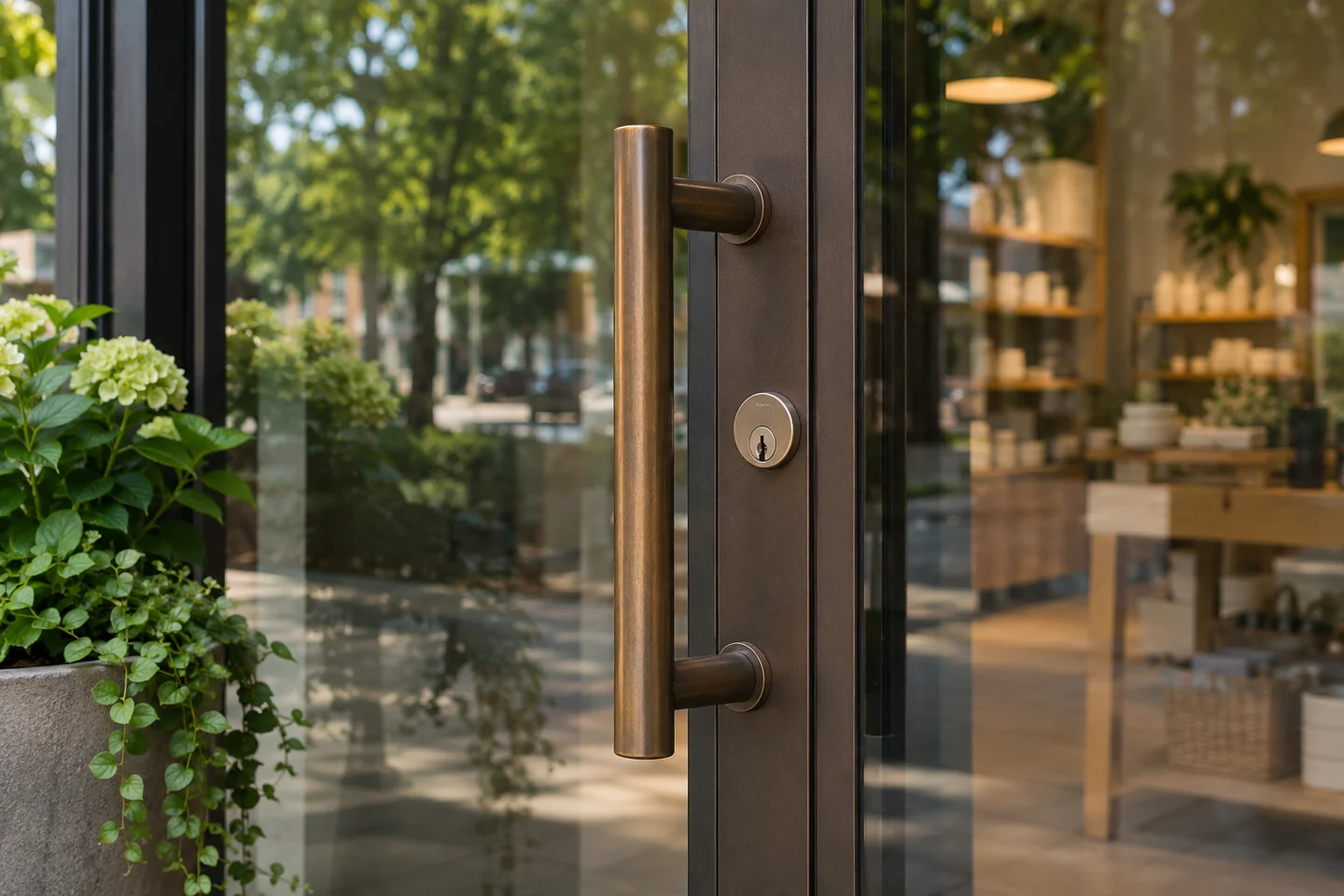
Separate access from wear.
If the door operates well but staff keys are unaccounted for, the question is who can enter. If the latch doesn't engage or the handle moves loosely, the hardware also needs attention. Those problems can occur together, but one doesn't automatically solve the other.
Name the entrance.
A business address near Catawba Avenue may include more than one door or suite. Say whether the issue is at the public entrance, an internal room or the back of the building. Include the suite and who will meet the person carrying out the work.
Agree who can approve a change.
A tenant's own office and a shared building door may have different owners or managers. Confirm that responsibility before changing hardware. Describe any exit-related problem clearly so it can be assessed for the right scope of work.
Make the key plan understandable.
List the openings and the people who use them. A rekeying plan may cover a single door or several compatible locks. Electronic access systems, specialist exit hardware and other equipment need separate confirmation rather than an assumption that every system is supported.
A couple of common questions.
Do we need to change every lock after a staff change?
Not automatically. Identify the keys issued, the doors they open and any access that needs to be changed.
Can the work involve one small office?
Explain the opening and the fault when you call. The size of the business alone doesn't determine the work needed.